
Primary Years Programme
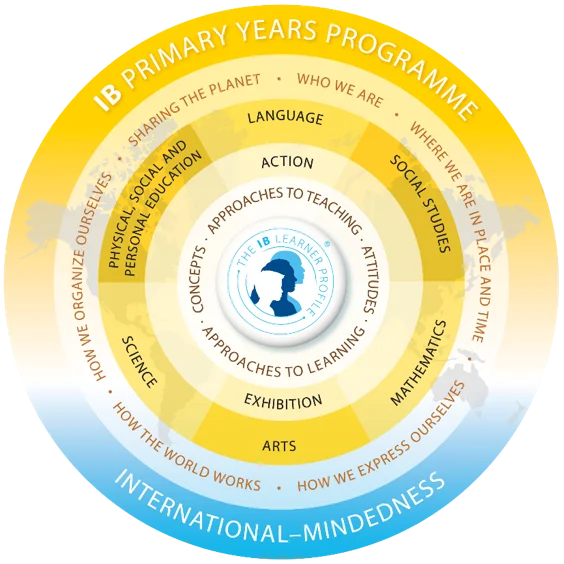
The IB Primary Years Programme, for students aged 3 to 12 (early and Primary Years), focuses on the development of the whole child as an inquirer, both in the classroom and in the world outside. It is a framework guided by six transdisciplinary themes of global significance, explored using knowledge and skills derived from six subjects' areas, as well as transdisciplinary skills, with a powerful emphasis on inquiry.
Early Years
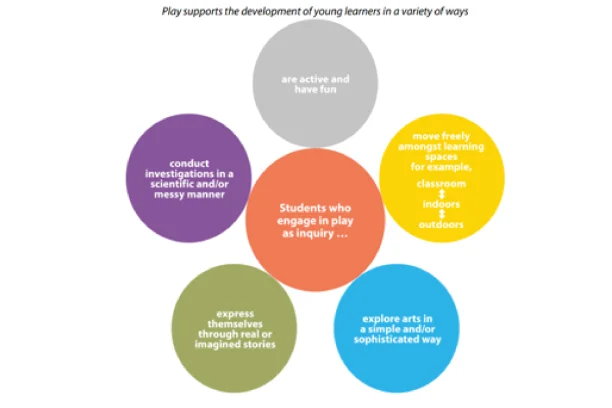
In the early years (3 – 6-year-olds), experiences play a pivotal role in shaping future social and cognitive learning (McCoy et al., 2017). The PYP framework supports cognitive and social-emotional development through play-based inquiry whereas six transdisciplinary themes guide meaningful exploration. Children primarily learn through play, fostering curiosity and agency. This active inquiry process develops language skills, self-regulation, and a positive sense of identity, preparing them for lifelong learning.
Play in children’s development highlights the importance of a developmentally appropriate environment for young children to learn at their own pace (Rushton, Juola-Rushton and Larkin 2010). Inquiring through play in the early years supports the notion that learning is an active process. Healthy learning environments and supportive relationships, created and demonstrated by the learning community, further support this learning process.
Primary Years
The International Baccalaureate aims to develop inquiring, knowledgeable and caring young people who help to create a better and more peaceful world through intercultural understanding and respect. The IB Programs encourage students across the world to become active, compassionate and lifelong learners who understand that other people, with their differences, can also be right.
The IB offers high-quality programs of international education that share a powerful vision. An IB education: focuses on learners – the IB's student-centred programs promote healthy relationships, ethical responsibility and personal challenge
Informed by values described in the learner profile, IB learners strive to become inquirers, knowledgeable, thinkers, communicators, principled, open-minded, caring, risk-takers, balanced, and reflective. These attributes represent a broad range of human capacities and responsibilities that go beyond intellectual development and academic success.

These cookies are essential for our website to function and cannot be turned off in our systems. They are usually set in response to actions you take that amount to a request for services, such as setting your privacy preferences, logging in, or filling out forms. You can set your browser to block these cookies or to alert you about them, but some parts of the site may not work if you do so. These cookies do not store any information that could personally identify you.
Analytical cookies are used to improve your website experience. They help us understand how you use the site (e.g., which pages you visit, how long you stay, etc.). This enables us to enhance the content we provide or make changes to the website’s design.
